
In a world where mobile security and global connectivity matter more than ever, travelers are turning to two powerful tools: VPNs (Virtual Private Networks) and eSIMs (Embedded SIM cards).
This February 2026 Megathread brings together everything you need to know about VPNs and eSIMs — how they work together, why you need them while traveling, and which providers stand out in 2026.
Let’s explore how you can stay connected, secure, and free from roaming costs anywhere on Earth.
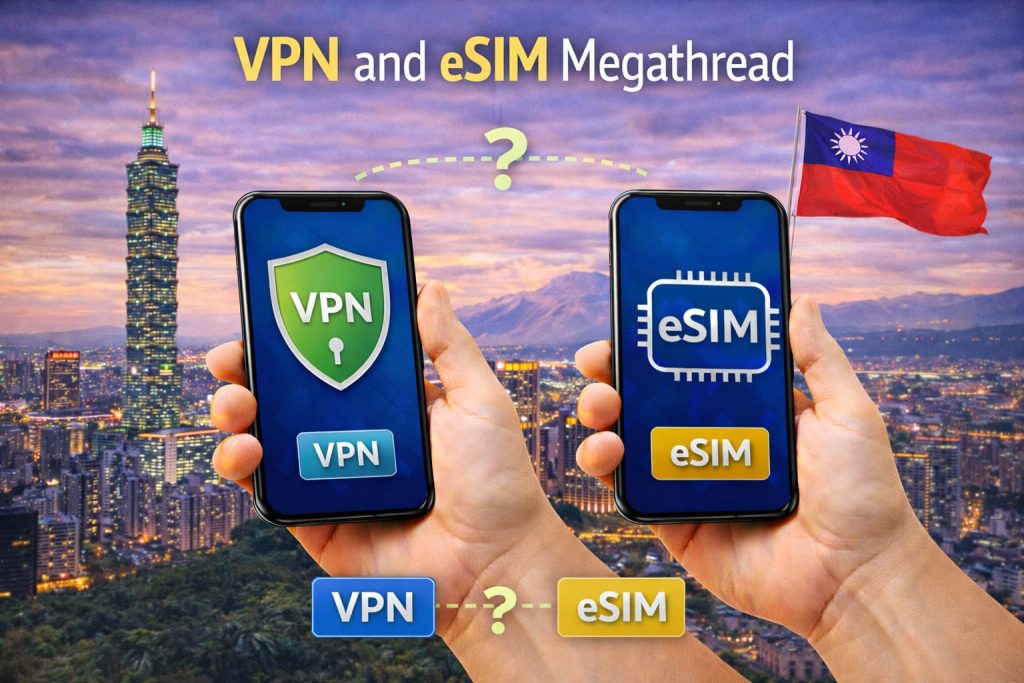
I. What Are VPNs and eSIMs?
VPN (Virtual Private Network)
A VPN encrypts your Internet traffic and reroutes it through secure global servers. This protects your online privacy, hides your IP address, and helps you access content (like streaming or banking) from your home region while abroad.
Key benefits:
- Encrypts data for secure browsing.
- Avoids tracking or throttling by public WiFi networks.
- Unlocks region‑restricted websites and apps.
eSIM (Embedded SIM)
An eSIM is a digital SIM card already built into your smartphone or tablet. Instead of swapping plastic cards, you activate a mobile plan instantly by scanning a QR code.
With eSIMs, you can get fast local data and avoid expensive roaming fees — one click, and you’re online. Reliable regional plans are available through platforms, which offer 4G LTE coverage in Taiwan and multi‑country Asia packages for travelers.
II. Why VPNs and eSIMs Work Perfectly Together
When combined, VPNs and eSIMs create a powerful duo for travel freedom and security.
| Benefit | VPN | eSIM |
| Privacy & Data Encryption | ✅ Protects Internet traffic | N/A |
| Bypass Geo‑Restrictions | ✅ Unlocks content | N/A |
| Connectivity on Arrival | N/A | ✅ Instant local data |
| Roaming Fee Elimination | ✅ / ⚡ Partial via tunneling | ✅ Local data rates |
| Multi‑Country Use | ✅ Global server switching | ✅ Multi‑region eSIM plans |
| Use Public WiFi Safely | ✅ Encrypted connection | ✅ Works securely on open WiFi |
Together, these two technologies make travel cheaper, safer, and smoother — especially for digital nomads, remote workers, and frequent flyers.
III. Best Practices for Using VPN + eSIM While Traveling
- Buy your eSIM before departure. Platforms like [https://taiwanesim.com/] deliver instant QR codes via email — you’ll be connected as soon as you land.
- Activate your VPN before joining public WiFi. This keeps your credentials safe from data theft at airports or hotels.
- Choose VPN servers near your eSIM region. For example, if you’re using a Taiwan eSIM, connect to a VPN server in Singapore or Japan for faster speeds.
- Balance performance and privacy. Streaming? Pick a high‑speed server. Handling sensitive work data? Choose a secure or “no‑logs” VPN server.
- Enable split tunneling when needed. Some VPNs let you route only specific apps (like banking) through the VPN, while allowing the rest of your data to flow normally via your eSIM network.
IV. Expected VPN Performance with eSIM Data
Your connection speed depends on both the VPN server and local eSIM coverage. In 2026, top travel regions like Taiwan, South Korea, Japan, and Singapore boast world‑class 4G/5G infrastructure.
| Region | Average eSIM Speed | VPN Latency (with encryption) | Suggested Use |
| Taiwan | 70–120 Mbps | 20–45 ms | Streaming, Video Calls |
| Japan | 90–150 Mbps | 25–40 ms | Gaming, Secure Transactions |
| Korea | 100–140 Mbps | 25–50 ms | Work/Remote Access |
| Singapore | 80–130 Mbps | 20–35 ms | Nomad Work, VPN Tunneling |
| Thailand | 50–100 Mbps | 40–70 ms | Social Media & Calls |
So even with encryption overhead, VPN‑through‑eSIM latency remains low, offering stable video quality for remote professionals and travelers alike.
V. How to Set Up VPN + eSIM Combo Before Travel
Step 1: Choose your eSIM plan at [https://taiwanesim.com/]. Pick from:
- Taiwan eSIM Unlimited Data (from $3.50),
- Fixed Data Plans (from $2.90), or
- Multi‑country Asia eSIMs (Taiwan + Japan + Korea).
Step 2: Activate the eSIM via QR code (Settings → Mobile Data → Add Plan).
Step 3: Install your VPN app before your trip. Use reputable VPNs — NordVPN, ExpressVPN, Surfshark, ProtonVPN, or Windscribe are trusted names.
Step 4: Connect VPN once you land. Switch your data to your eSIM and launch your VPN to secure your connection instantly.
Step 5: Enjoy unlimited data & safe browsing. Perfect for WiFi‑less airports, remote workspaces, or cafés.
VI. Common Questions
Can I use free VPNs with my eSIM? Possible, but not recommended. Free VPNs often log data or display ads. For travel security, paid options with “no logs” policies are safer.
Can eSIMs be used for texting or calls? Data eSIMs like those from Taiwan eSIM are data‑only, meaning they don’t support traditional SMS or calls. But messaging apps (WhatsApp, LINE, Telegram) work seamlessly.
Will using a VPN make my eSIM slower? Minimal impact (<15% typically). If latency increases, connect to a VPN server closer to your eSIM’s coverage country.
Can I use the same eSIM and VPN setup across multiple countries? Yes — choose multi‑country eSIM plans that allow cross‑border roaming without changing QR codes. The VPN adds a security layer over all of them.