
When planning a trip abroad, most travelers ask the same essential question: “Should I get a prepaid SIM or an eSIM that lets me send text messages overseas?”
Both prepaid SIMs and eSIMs can keep you connected while traveling — but how they handle SMS text messaging differs. In this guide, we’ll clarify which option is better for your needs, how messaging works with each, and share real‑world tips to avoid losing contact while abroad.
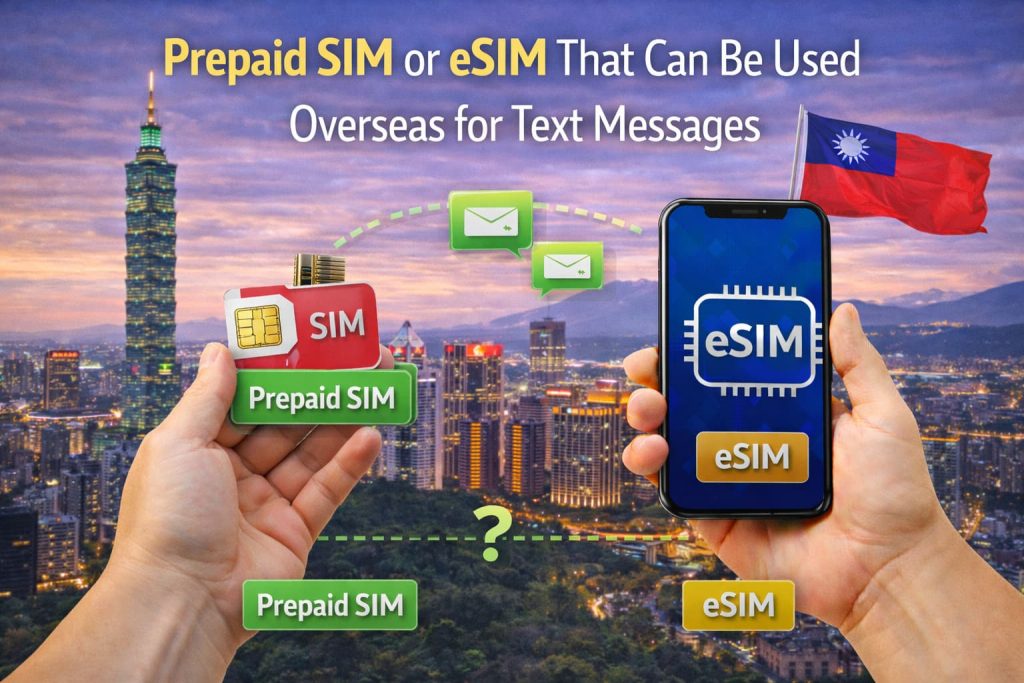
I. What’s the Difference Between a Prepaid SIM and an eSIM?
Prepaid SIM cards are physical cards you insert into your phone. You buy them at local shops or airports, load balance in advance, and use that balance for calls, texts, and data.
An eSIM (embedded SIM), on the other hand, is a digital version of a physical SIM that you activate instantly via a QR code — no card swap required.
Unlike traditional SIMs, eSIMs for travel are purchased online before you fly. For example, at [https://taiwanesim.com/], tourists can get instant eSIM access across Asia, including Taiwan, Japan, and Korea, without waiting in line or paying roaming fees.
II. Can eSIMs Be Used for Text Messaging Overseas?
Most travel eSIMs are data‑only, meaning they do not support SMS or direct phone calls. However, you can still receive and send text messages over the Internet using apps like WhatsApp, Telegram, iMessage, or LINE — they work perfectly with data eSIMs.
Here’s how it works:
- You keep your WhatsApp number linked to your home SIM.
- Install and use your travel eSIM for mobile data only.
- As long as your original SIM stays active (preferably set to “no roaming”), services like WhatsApp continue working with your real number.
So, while data eSIMs don’t support traditional SMS, they’re perfect for app‑based messaging that’s free and unlimited over WiFi or data.
III. When Should You Choose a Prepaid SIM Instead?
If you must send or receive standard text messages (SMS) — for example, receiving verification codes from your bank, or texting local numbers directly — a prepaid SIM card might be a better fit.
With a prepaid SIM:
- You get a local number capable of voice and SMS.
- You can top up easily online or at convenience stores.
- Some plans combine data + call + text credits for tourists.
However, keep in mind that you’ll need to change SIM cards, which can disable your regular number temporarily — unless your phone supports dual SIM or eSIM.
IV. When an eSIM Is the Smarter Choice
A travel eSIM is far more practical if you:
- Don’t need to use traditional SMS.
- Prefer keeping your home SIM active for calls and texts.
- Want instant setup and good data speed in multiple countries.
- Would rather avoid roaming fees and plastic SIM cards.
eSIMs from providers such as [https://taiwanesim.com/] connect to top networks with 99% LTE coverage across Taiwan and its neighboring regions, offering flexible plans from $2.90 to $16.50 — ideal for tourists and business travelers alike.
V. Comparing Prepaid SIM vs eSIM for Overseas Texting
| Feature | Prepaid SIM | Travel eSIM |
| Requires physical card | ✅ Yes | ❌ No (digital only) |
| Supports traditional SMS | ✅ Yes | ⚠️ No (data‑only) |
| Works with WhatsApp / iMessage | ✅ Yes | ✅ Yes |
| Setup time | Can take 15–30 mins | ⚡ Instant with QR code |
| Multi‑country use | Often single country | 🌎 Yes (multi‑country eSIMs) |
| Risk of losing SIM | Moderate | None |
| Eco‑friendly | ❌ Plastic waste | ♻️ 100% digital |
In short:
- Prepaid SIMs = better if you need classic SMS or calls.
- eSIMs = better for data, online messaging, and easy roaming.
VI. Messaging Apps That Work Perfectly Over eSIM
Even without traditional SMS, you can stay connected seamlessly through:
- WhatsApp (keeps your home number active)
- Telegram
- LINE (popular across Asia)
- iMessage / FaceTime
- Facebook Messenger
As long as you have Internet data, these apps deliver instant messaging, media sharing, and even voice calls — all without needing a local number.
VII. How to activate an eSIM for Overseas Use
Here’s how simple it is to get started with a travel eSIM:
- Go to:https://taiwanesim.com/
- Choose your plan — from unlimited to fixed data options (1 to 30 days).
- Purchase online securely.
- Receive a QR code instantly in your email.
- Scan and activate it under your phone’s Mobile Data → Add eSIM settings.
You’ll be online before you even land — no waiting, ID, or SIM swapping required.
VIII. Dual SIM Setup Tip for Travelers
If your phone supports dual SIM or eSIM + physical SIM, here’s a great setup:
- Physical SIM (home number) → Only for SMS and incoming calls (keep roaming off if you want to avoid charges).
- eSIM (travel data) → Active for mobile Internet and messaging apps.
That way, you keep texting ability through your existing number while enjoying cheap, fast data from your eSIM provider.
IX. Final Thoughts
Both prepaid SIMs and eSIMs can keep you connected overseas — but for most travelers, the eSIM is far more flexible, eco‑friendly, and cost‑effective.
If your primary goal is data access and app messaging, a travel eSIM gives you everything you need instantly. However, if you rely on receiving bank codes or direct SMS, consider using dual SIM mode with your prepaid card active for texts.
To explore reliable eSIM options across Taiwan and neighboring countries, visit [https://taiwanesim.com/] — your go‑to source for instant activation, affordable data plans, and 24/7 traveler support.